



News
Players
Tournaments


News
Players
Tournaments


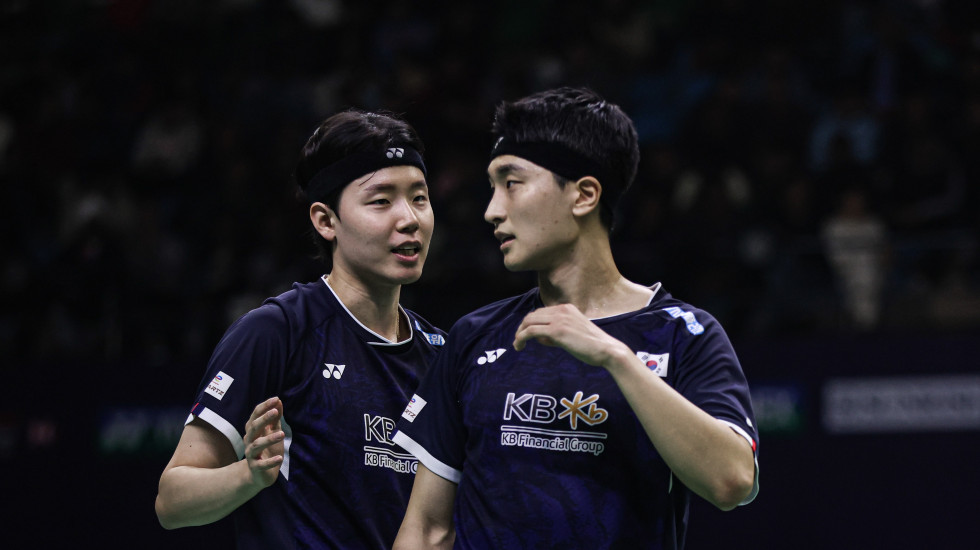
New Combinations Light Up Circuit
Among the exciting developments in the paired events this year has been the rejigging of established pairs, particularly among the Asian powers.
As the circuit moves to Europe, with the YONEX German Open and later the YONEX All England, several of these new pairs will be in focus.
There have already been several early successes. The season-opener, the PETRONAS Malaysia Open, saw new pair Kim Won Ho and Seo Seung Jae take the men’s doubles title, while in the women’s doubles, the relatively recent pairing of Yuki Fukushima/Mayu Matsumoto won their biggest title together. Quite impressively, a third newly-formed pair, Dechapol Puavaranukroh/Supissara Paewsampran, annexed the mixed doubles.
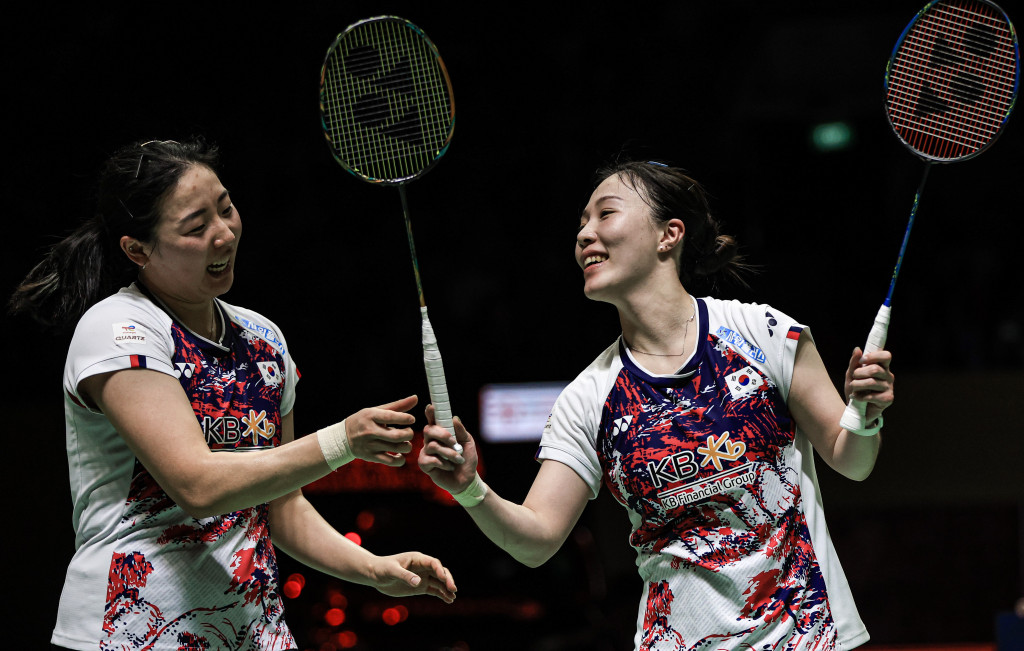
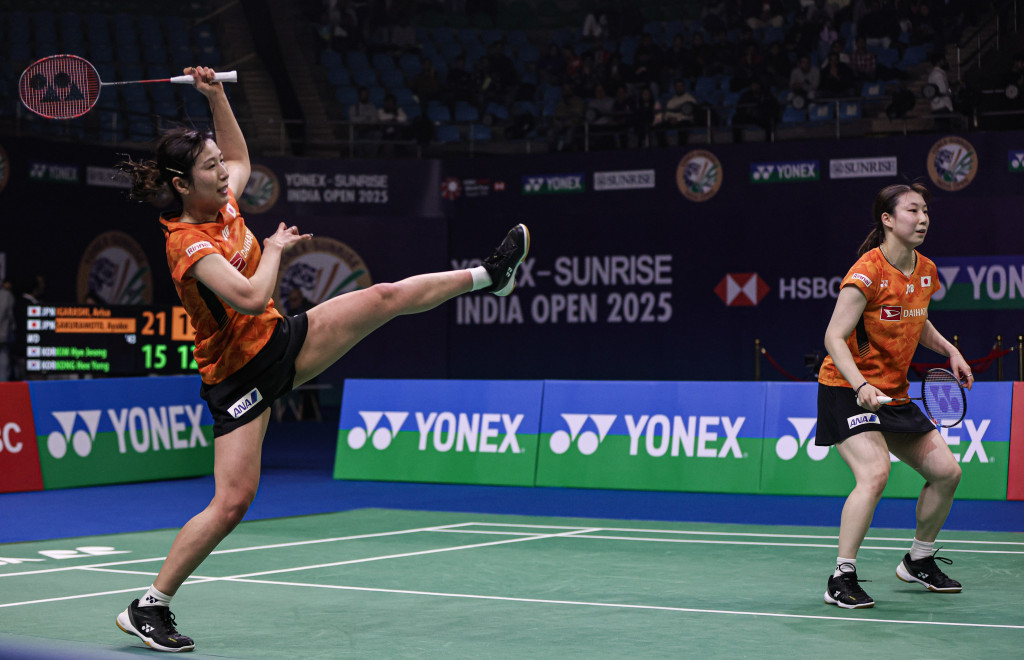
Favourable winds continued to blow for new pairs as the circuit progressed, with Japan’s Arisa Igarashi/Ayako Sakuramoto taking the women’s doubles title in India over another new-look pair, Kim Hye Jeong/Kong Hee Yong – who captured the Indonesia Masters title the very next week.
At the last World Tour tournament of the first quarter – the Princess Sirivannavari Thailand Masters — Seo Seung Jae emerged triumphant with yet another partner, Jin Yong. This trend held in women’s doubles (Lanny Tria Mayasari/Siti Fadia Silva Ramadhanti) and mixed doubles (Puavaranukroh/Paewsampran).
The post-Olympic period typically sees new combinations emerging as team seek new winning combinations. Seo explained the recombinations in the Korean team as an “experiment” and was himself unsure of how long it would continue.
“We’re testing,” he said, at the India Open. “We aren’t sure if we are going to stick with these partnerships for the rest of the season.”
With several members of the Korean team having come up the ranks together, the recombinations aren’t perhaps as disruptive as they could be with other teams.
“We were partners we were young; now that we have more experience, we know each other’s merits better, and we are learning more and more from each other,” Seo said of his India Open partner Kim Won Ho.
Kim, Olympic silver medallist in mixed doubles and a versatile all-rounder, said the new partnership offered him the opportunity to learn from his senior.
“There are points when we are not able to sync with other, but equally there are times we are able to play in sync. Since the time we were juniors, he has been helping me. He’s like an elder brother.”
While most recombinations are decided by the team management, in Igarashi/Sakuramoto’s case, it was Sakuramoto who suggested the new journey together. The new pairing has already struck big, winning a title in just their third tournament.
“There are not a lot of women’s doubles players who are as aggressive and jump smashing as Arisa, so that’s our strength,” said Sakuramoto, explaining her decision to partner Igarashi, who had a distinguished mixed doubles career.

Igarashi, who was quite a sight in mixed doubles with her aggressive, jump-smashing game, has now brought the same element into women’s doubles. In India the Japanese duo were unstoppable, beating four top pairs (Treesa Jolly/Gayatri Gopichand Pullela; Liu Sheng Shu/Tan Ning; Li Yi Jing/Luo Xu Min and Kim Hye Jeong/Kong Hee Yong) on the way to the title.
Contemplating the difference between women’s doubles and mixed, Igarashi said: “The speed is different. In mixed doubles you need to keep a high pace all the time, but in women’s doubles there are times when you have to slow it down, and at other times you have to speed up.”
While several of the new combinations have found their winning rhythm, not every pair has had a heady start. Yuta Watanabe and Maya Taguchi, for instance, have struggled to get going. Watanabe said they would need time to establish themselves.
“She’s still young, she’s 19, so we need more experience and we can then improve, on things like rotation and defence. But it’s not so bad at the moment.
“She (Maya) is also aggressive, but the difference is that both of us are left-handed, so I have to keep changing my thinking, and our strong side is the left side, so it’s about how to use our left side.”
“This year is new for me because I’ve left the national team and I’m a professional. I just enjoy my time now. I’m super excited every day.”

BWF World Tour News
Japan Open: Sensational Day for USA 16 July 2026
Japan Open: Vitidsarn Passes Stiff Opening Test 15 July 2026
Japan Open: Impressive Wins for Yang, Buhrova 14 July 2026
Smashing Stats: Japan Open 2026 14 July 2026
Japan Open: Set to Make a Mark 13 July 2026

Where To Watch: DAIHATSU Japan Open 2026 13 July 2026
Canada Open: Clean Sweep by Japan 6 July 2026
Canada Open: Okimoto Halts Lai’s Home Title Bid 5 July 2026
Where To Watch: YONEX Canada Open 2026 3 July 2026